[et_pb_section fb_built=”1″ _builder_version=”4.14.8″ _module_preset=”default” custom_padding=”8px|||||” global_colors_info=”{}”][et_pb_row _builder_version=”4.14.8″ _module_preset=”default” global_colors_info=”{}”][et_pb_column type=”4_4″ _builder_version=”4.14.8″ _module_preset=”default” global_colors_info=”{}”][et_pb_text _builder_version=”4.14.8″ _module_preset=”default” header_4_text_color=”#000000″ hover_enabled=”0″ global_colors_info=”{}” sticky_enabled=”0″ link_font=”|700|||on||||”]
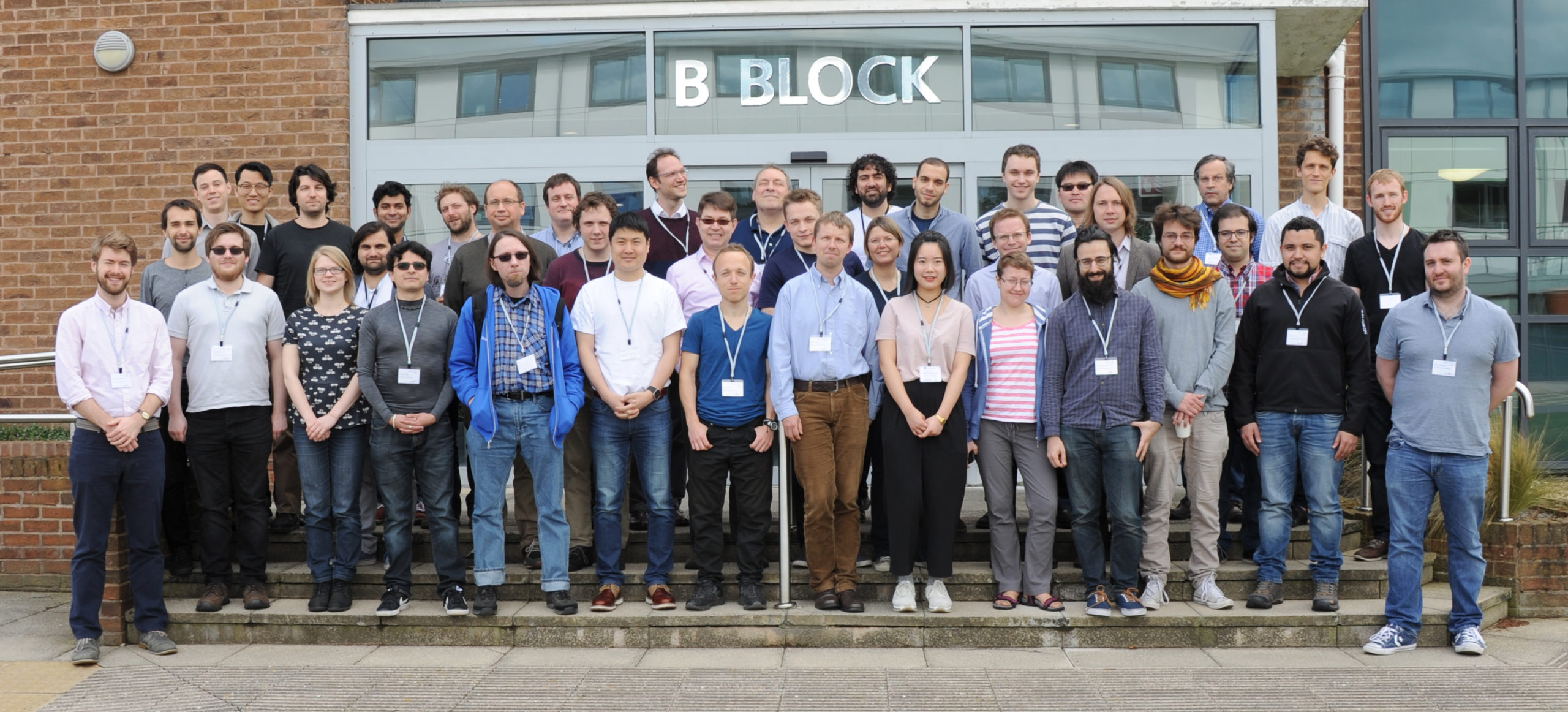
A QUESTAAL hands-on course was held at Daresbury Laboratory, May 16-19, 2017.
The following tutorials were given:
- Mark van Schilfgaarde – “Introduction to correlated systems” – “Introduction to LMTO” – “Approach to strong correlations“
- Lorenzo Sponza – “Key concepts of LDA+DMFT and QSGW+DMFT” – “Tutorial: Spin fluctuations in Ni” – “Tutorial: Spectral functions“
- Myrta Gruening – “Many body perturbation theory“
- Jerome Jackson – “Tutorial: lmf – Questaal’s Full Potential LMTO Code“
The Questaal web site documents many of the codes features, provides many tutorials, and explains how to download the code. For a quick test drive, you can also download precompiled binaries.
[/et_pb_text][/et_pb_column][/et_pb_row][/et_pb_section]